The prime minister toured communities near Israel’s southern border with Egypt with Katz and Ben-Gvir, outlining a multi-year plan to expand settlements and crack down on crime.
Israel’s government will launch a national project to “return the Negev to the State of Israel,” Prime Minister Benjamin Netanyahu said during a tour of the western Negev on Wednesday.
The tour, conducted with Defense Minister Israel Katz, National Security Minister Itamar Ben-Gvir, and senior ministry officials, included briefings on weapons smuggling and police enforcement near the Egyptian border.
According to the Prime Minister’s Office and police officials, the plan aims to strengthen border communities, curb organized crime, and reinforce state governance in the South, as well as large-scale settlement expansion and a renewed focus on restoring law and order.
The delegation visited the community of Revivim and observed the area of Bir Hadaj, where Israel Police Inspector-General Kobi Shabtai, ISA Director Ronen Bar, and IDF Deputy Chief of Staff Maj.-Gen. Amir Baram briefed them on enforcement efforts against illegal possession of weapons and smuggling. Officials outlined seizures and counter-smuggling operations along the southern borders and in nearby communities.
Netanyahu and Katz later visited the “Midbar Ish” farm near Kmehin, where directors-general from several ministries presented progress on a five-year plan coordinated with the Defense Ministry.

The plan envisions significant demographic growth, distribution of settlements along the eastern and western borders, development of employment zones, and upgrades to civilian infrastructure. It also addresses local security needs as part of an inter-ministerial effort to reinforce state presence and governance across the Negev.
During the tour, the prime minister said the initiative combines civil development with intensified enforcement. “This means settlement on a scale we haven’t known, and it also means providing for the Bedouin residents. But it means, first and foremost, restoring law and order,” Netanyahu said, citing the convergence of criminal and security threats, including illegal firearms and cross-border drone activity.
Netanyahu targets Negev smuggling networks in border tour
Security officials updated the delegation on efforts to disrupt smuggling networks operating along the Egyptian border and in the Negev. According to the briefing, police and military units have increased patrols and interdictions to counter weapons and narcotics trafficking that fuels local crime. The visit underscored the link between internal security and border control, an issue highlighted repeatedly in recent months.
Netanyahu thanked the security chiefs and ministers for backing the initiative, calling it “a national mission of the highest order.” He said he would continue to make personal visits to the region as the program progresses.
Netanyahu concluded the tour by reiterating that restoring governance in the Negev would proceed alongside settlement growth and economic investment. “We will bring a national project to achieve all these goals, but primarily to restore governance to the Negev,” he said.
LATEST POSTS
- 1
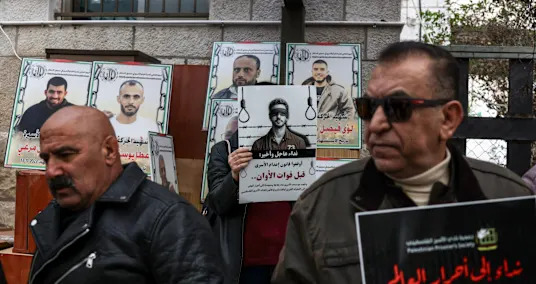
 Hundreds rally in West Bank against Israeli death penalty for Palestinians
 - 2Coca-Cola Co. and bottlers to invest in South Africa operations
- 3Jamie Dimon warns Iran war could drive inflation, interest rates higher
- 4Instructions to Grasp the Innovation Behind 5G Pinnacles\
- 57 Logically Demonstrated Techniques for Better Rest




- Ferrari Cavalcade Suspended After High-Speed Crash in Argentina Involving a Purosangue
- Jason Kelce opens about wife Kylie Kelce's past pregnancy loss
- IDF strikes terror infrastructure across Iran, attack reported on Kashan airport
- The wolf supermoon will kick off 2026 with a celestial bang. Here's when and how to see it.
- China bans storing cremated remains in empty 'bone ash apartments'
- Remain Fit and Sound with These Exercise Fundamentals
- Palestinians protest against Israel's new death penalty law
- Fire Allegedly Triggered by Wedding Cake Sparkler Causes Venue to Go Up in Flames, Leaving Groom with Second-Degree Burns
- NAFFIC, AWARE claim first China-EU DPP for textiles